Loading...
Robertson
Heritage Luxury
Jan Harmsgat Country House
Jan Harmsgat Country House — Crafting wines since 1723
4.6(379 reviews)
Est. 1723About Jan Harmsgat Country House
Established in 1723
In 1674, east of what would become the town of Bonnievale, on a farm nestled under the towering Langeberg Mountains, Johannes Harman Jansz Potgieter was born. He married in 1714, and the farm appears on the grant of 1723 as Jan Harmansz Schat — "Jan Harman's Treasure" — from which the name was eventually corrupted to Jan Harmsgat. It is one of the oldest continuously farmed properties in the Robertson Wine Valley, a place where layers of history have accumulated for three centuries.
The farm's historical significance extends beyond its name. Hermanus Steyn, a figure of note in early Cape colonial history, lies buried on the property in a small plot marked by a granite gravestone visible a few hundred metres from the main house. The estate was featured in the writings of Lady Anne Barnard, the Scottish socialite and diarist who documented Cape life in the late eighteenth century. These connections to the deep past give Jan Harmsgat a gravitas that few Cape wine farms can match.
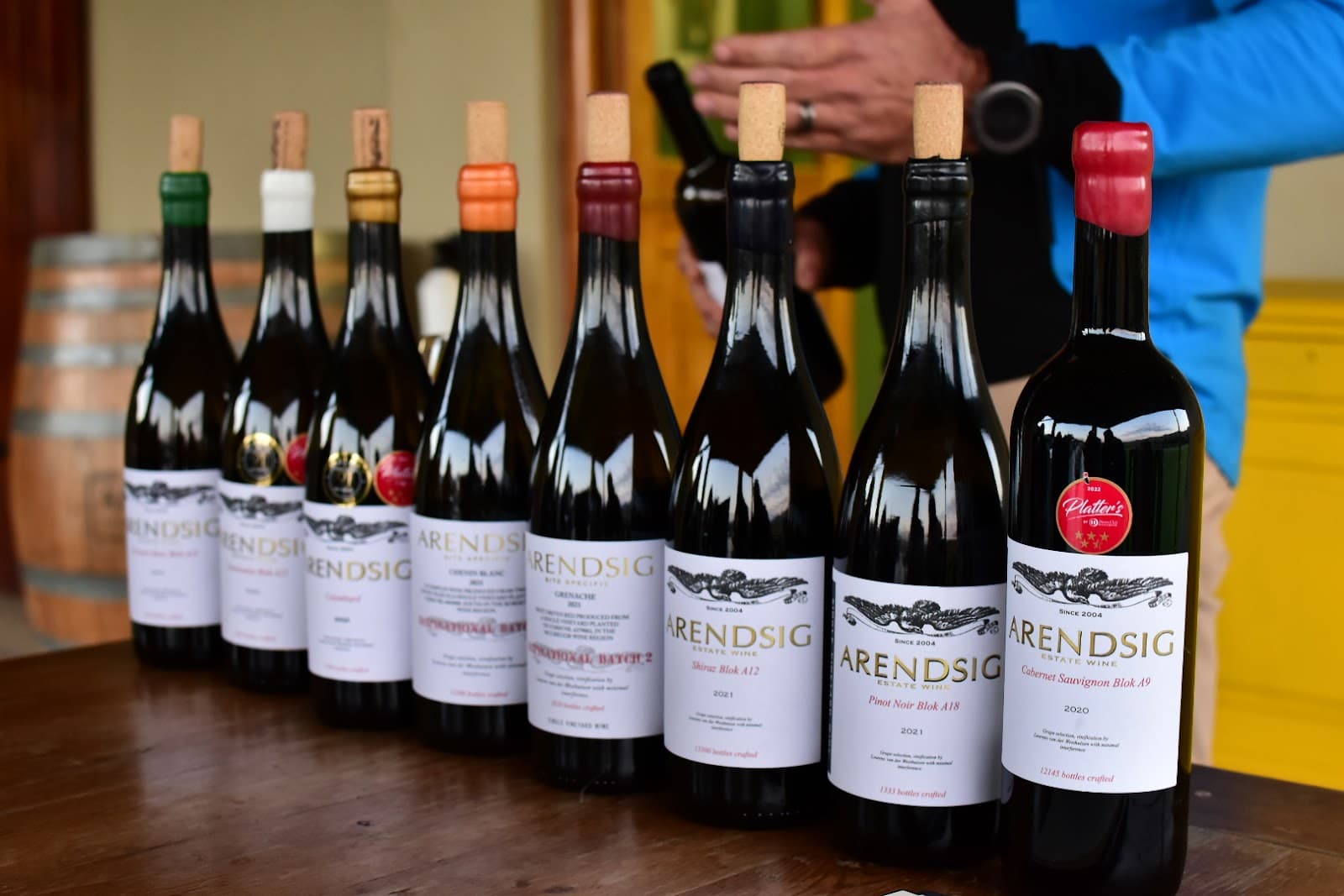
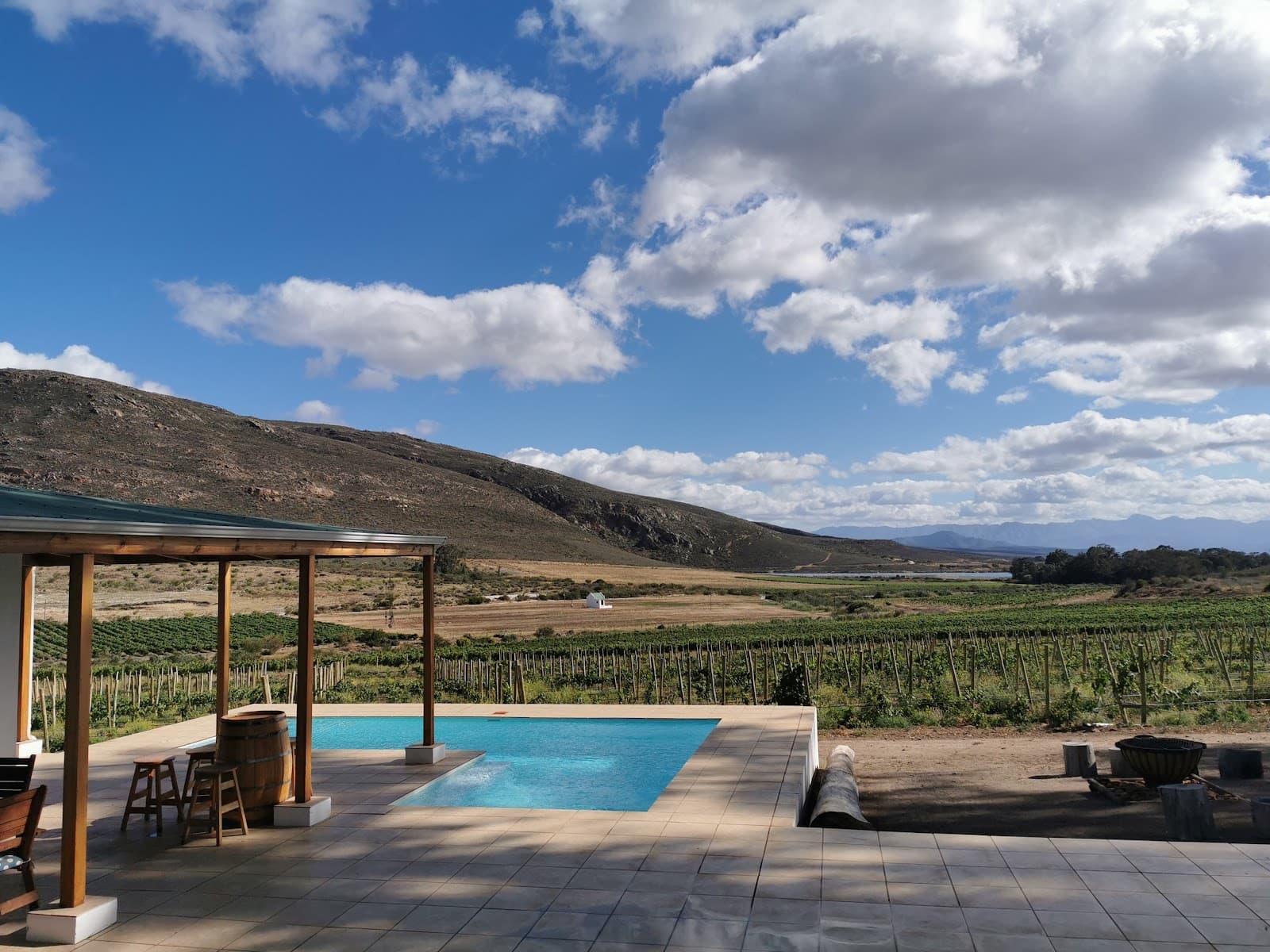
Today, Jan Harmsgat is a family-run working farm at the southernmost tip of the Robertson Wine Valley, where the arid Karoo meets the cooling ocean breezes from the coastal regions to the south. This unique position — bordered by the Langeberg foothills and kissed by maritime air — creates terroir conditions that favour elegant, expressive wines. The estate cultivates 16.8 hectares of vineyards planted with Pinot Noir, Cabernet Sauvignon, Shiraz, Pinotage, Chenin Blanc, and Sauvignon Blanc, producing small-batch, single-block wines in limited quantities.
The Pinot Noir has become the estate's calling card, winning the trophy for best Pinot Noir in the Robertson Wine Valley at the Young Wine Awards. But Jan Harmsgat is not solely a wine farm. Pomegranates and pecans share the land with the vines, and the estate's JHG Pomegranate Juice — 100% pomegranate with no added sugar, water, or colourants — has become a destination product in its own right.
Dining centres on Just Amy, the estate's charming farm-to-table restaurant set beneath a canopy of pecan nut trees, with an outdoor terrace perfect for sunny afternoons and a cosy interior for cooler months. The menu draws on the seasons and the land around the farm.
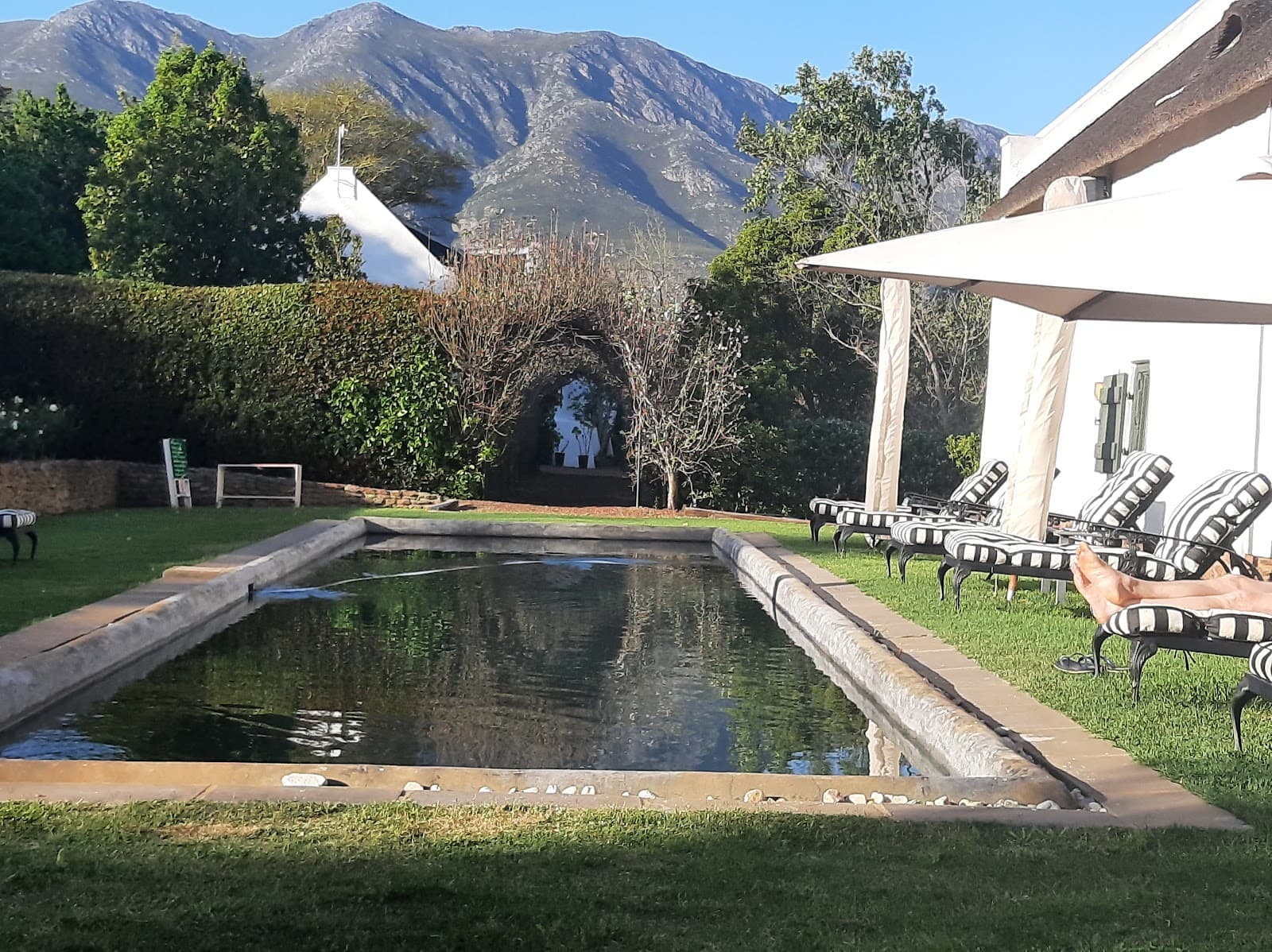
Accommodation comes in the form of a 5-star country house with 10 rooms, a saltwater swimming pool, and views across the vineyards to the Langeberg peaks. Google describes it concisely: "Sophisticated rooms on an 18th-century farm, plus a high-end restaurant and a saltwater pool." That captures the essence — a place where three centuries of farming heritage meet contemporary luxury, where wine, pomegranates, and pecans grow side by side, and where the treasure in Jan Harman's name turns out to be the land itself.
Sophisticated rooms on an 18th-century farm, plus a high-end restaurant and a saltwater pool.
One of the oldest continuously farmed properties in Robertson — land grant dates to 1723
Award-winning Pinot Noir — trophy for best in Robertson Wine Valley
5-star country house with 10 rooms and a saltwater pool on an 18th-century farm
JHG Pomegranate Juice — 100% pomegranate, no additives, a destination product
Just Amy farm-to-table restaurant beneath pecan nut trees
Historical connections to Lady Anne Barnard and Hermanus Steyn
Small-batch, single-block wines from 16.8 hectares at the southernmost tip of Robertson
Luxury
Scenic
Our Heritage
The story of Jan Harmsgat Country House through the years
1674
Potgieter Born on the Farm
Johannes Harman Jansz Potgieter is born on the farm east of present-day Bonnievale, nestled under the Langeberg Mountains.
1723
Land Grant
The farm appears on the grant of 1723 as Jan Harmansz Schat ('Jan Harman's Treasure'), from which the name Jan Harmsgat derives.
Late 1700s
Lady Anne Barnard
The estate is featured in the writings of Lady Anne Barnard, the Scottish diarist who documented Cape life in the late eighteenth century.
Accreditations
Trophy for Best Pinot Noir in Robertson Wine Valley (Young Wine Awards)
More in Robertson
Quick Facts
RegionRobertson
Established1723
Rating4.6 / 5
Wine Varietals6
Kid-Friendly