Loading...
Stellenbosch
Heritage & Farm Life
Boschendal
Boschendal -- Where three centuries of heritage meet a living farm
4.3(1060 reviews)
Est. 1685About Boschendal
Established in 1685
Few estates in South Africa carry the weight of history that Boschendal does. The farm's title deeds date to 1685, making it one of the oldest agricultural properties in the Cape, and its story reads like a compressed history of the Western Cape itself -- from French Huguenot refugees to British imperialism, from fruit empires to one of the country's most ambitious modern agricultural revival projects.
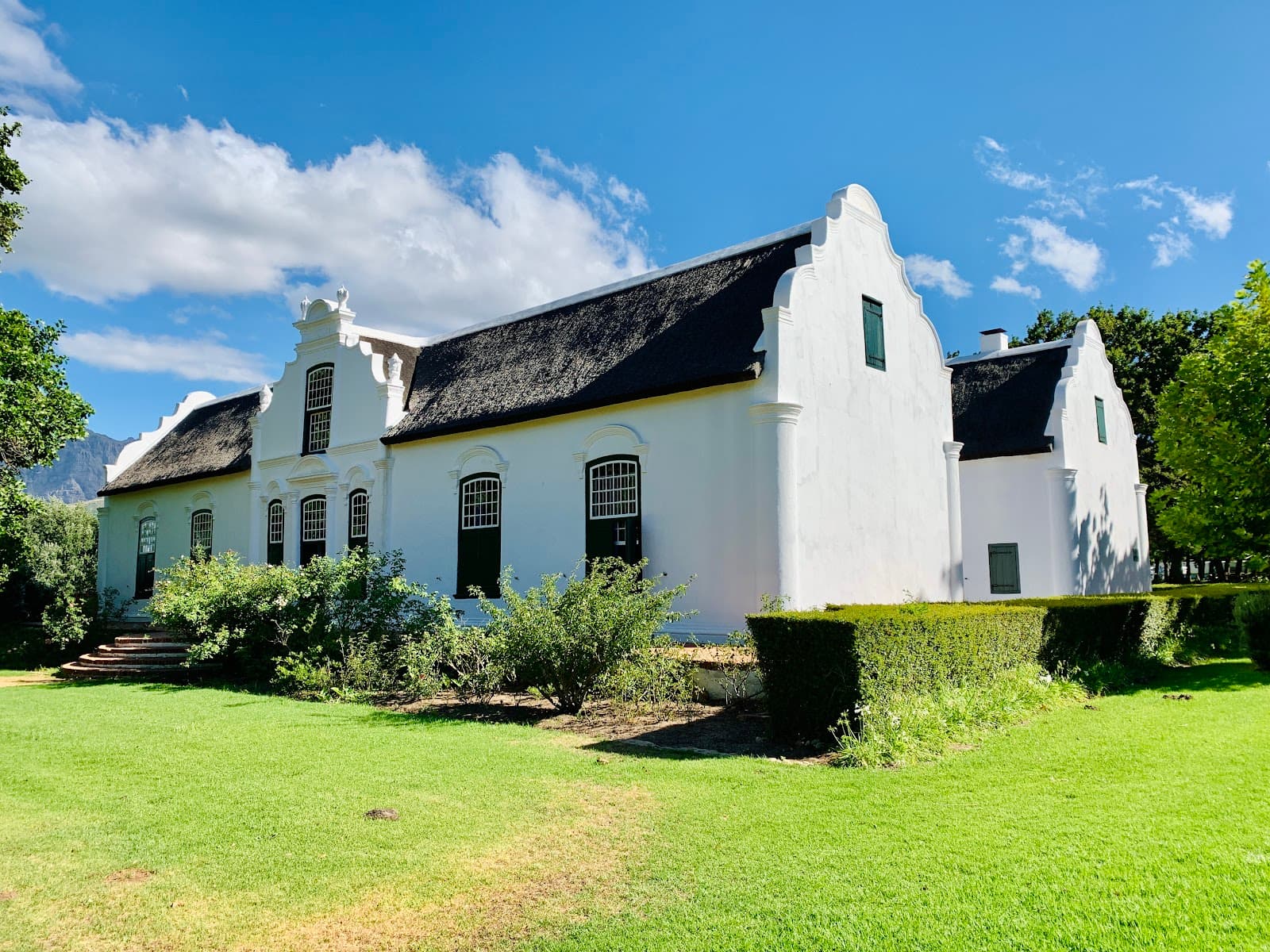
The first owner of the land was Jean le Long, a Huguenot who arrived at the Cape of Good Hope in 1688 as part of a group of some 200 French Protestant refugees fleeing religious persecution in Europe. The Dutch East India Company granted him the farm, and for the next century it would pass through the hands of settlers building a new life in an unfamiliar landscape. In 1715, Abraham de Villiers -- another Huguenot -- acquired Boschendal, and the De Villiers family would farm it continuously until 1879, a remarkable 164-year tenure that saw the construction of the iconic Manor House in 1812. That neoclassical Cape Dutch homestead, with its ornamental gable and H-plan layout, still stands today as a National Monument and the visual centrepiece of the estate.
In 1887, Cecil John Rhodes purchased Boschendal and folded it into his commercial fruit-farming operation, Rhodes Fruit Farms, following advice from the Californian horticulturist Harry Pickstone. The estate's fertile soils and favourable climate proved ideal for deciduous fruit, and for decades Boschendal was as much an orchard as a vineyard. The Anglo American Corporation took control in the late 1960s, before a 2003 sale to an international consortium. The most significant modern chapter began in 2012, when a group of South African investors acquired the property and launched an intensive rejuvenation programme -- restoring the historic Manor House, replanting vineyards, and transforming Boschendal into a working farm that produces everything from wine and charcuterie to vegetables, honey, and Black Angus beef.
Today Boschendal's guiding vision is to be a pioneering and ethical village -- a place where nature flourishes, communities prosper, and every moment is an invitation to pause, breathe, and reconnect. The estate describes its mission as 'regenerating our future through people and soil,' dedicated to empowering people and restoring soil health across its expansive 1,900-hectare property.
One of the oldest wine estates in South Africa, with title deeds dating to 1685
First wine estate in the world to achieve Green Key certification for accommodation
Historic Manor House (1812) -- a declared National Monument with neoclassical Cape Dutch architecture
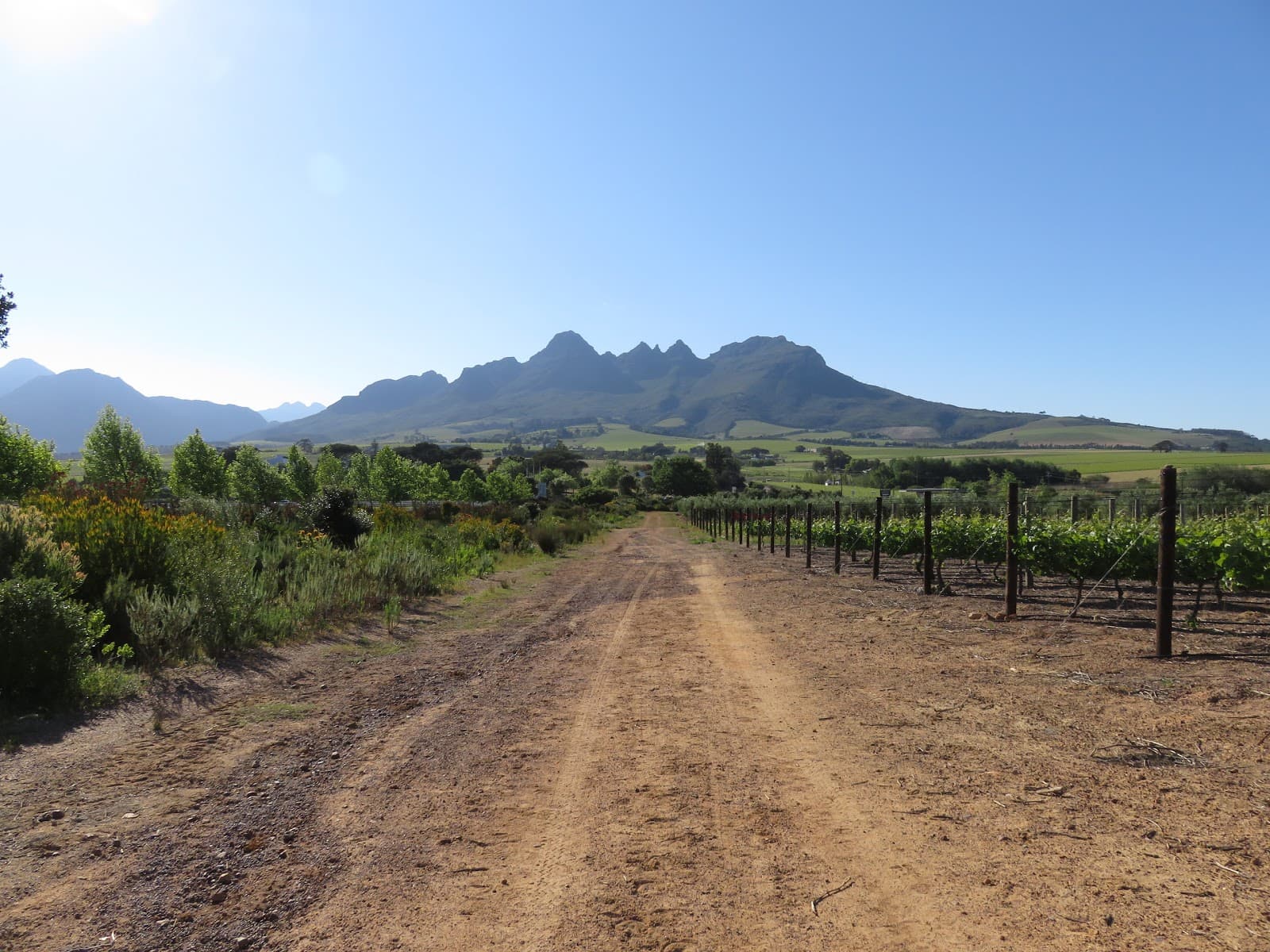
1,900-hectare estate with regenerative farming producing wine, charcuterie, beef, pork, honey, and vegetables
Cap Classique specialist with the flagship Jean Le Long Cuvee Prestige Blanc de Blancs honouring the original 1688 Huguenot settler
Elgin Chardonnay awarded 95 points by Tim Atkin
WWF Conservation Champion with 800 hectares actively regenerated and 2 million kWh annual solar generation
Franschhoek Wine Tram stop with Wine & Wander Safari, horse riding, cycling trails, and mountain biking
Camp Canoe luxury camping with private wood-fired hot tubs
Corporate gifting programme with bespoke and pre-curated hampers featuring estate wines and artisanal produce
Award-Winning Food
Award-Winning Wines
Heritage Estate
Elegant & Stylish
Gourmet
Luxury
Historic
Elegant
Romantic
Scenic
Family Friendly
The Winemaker
Lizelle Gerber serves as white wine and MCC winemaker at Boschendal, having crafted the estate's celebrated Elgin Chardonnay since 2011. Under her stewardship, the Boschendal Elgin Chardonnay 2016 earned 95 points in Tim Atkin's South African Wines Report. The cellar team oversees a portfolio spanning Cap Classique sparkling wines, cool-climate Elgin varietals, and the historic 1685 Collection.
Our Heritage
The story of Boschendal through the years
1685
Title Deeds Granted
The original title deeds for the Boschendal farm are issued, making it one of the oldest agricultural properties in the Cape.
1688
Jean le Long Arrives
French Huguenot refugee Jean le Long arrives at the Cape as part of a group of 200 Protestants fleeing religious persecution and is granted the Boschendal land by the Dutch East India Company.
1715
De Villiers Family Acquires the Farm
Abraham de Villiers, another Huguenot settler, purchases Boschendal. The De Villiers family would farm the estate continuously for 164 years.
1812
Manor House Completed
Paul de Villiers and his wife Anna Susanna Louw complete the neoclassical Cape Dutch Manor House, now a declared National Monument.
1887
Cecil John Rhodes Purchases the Estate
Mining magnate and politician Cecil John Rhodes acquires Boschendal and incorporates it into his commercial fruit-farming enterprise, Rhodes Fruit Farms.
1960s
Anglo American Corporation Era
The Anglo American Corporation takes control of Boschendal, maintaining operations through the late 20th century.
2003
International Consortium Sale
Boschendal is sold to an international consortium of investors led by property developer Clive Venning.
2012
South African Revival
A consortium of South African investors acquires the estate and launches a comprehensive rejuvenation programme -- restoring the Manor House, replanting vineyards, and transforming Boschendal into a diversified working farm.
2015
Alien Clearing Programme Launched
Boschendal implements an Alien Clearing and Water Conservation Programme, actively regenerating 800 hectares of farmland. Rivers and surrounding vegetation are cleared of alien plants, which are repurposed for mulch and composting.
Sustainability
Boschendal is the first wine estate in the world to achieve Green Key certification for its accommodation -- an internationally recognised eco-label managed by the Foundation for Environmental Education (FEE) that requires meeting strict criteria spanning energy management, sustainable food sourcing, community involvement, and guest awareness. The estate holds WWF Conservation Champion status, committing to biodiversity-friendly, regenerative farming practices and the conservation of unique natural areas. Additional certifications include GlobalG.A.P. (Integrated Farm Assurance for safe, socially and environmentally responsible farming), SIZA (Sustainability Initiative of South Africa for ethical trade), WIETA (Wine and Agricultural Ethical Trade Association for labour compliance), and IPW (Integrated Production of Wine for environmentally responsible wine production). Boschendal is actively working to conserve 700 hectares in alignment with the Greater Simonsberg Conservancy and participates in the National Landcare Programme. The estate's Alien Clearing and Water Conservation Programme, launched in 2015, has actively regenerated 800 hectares. A solar farm and on-roof solar installations generate around 2 million kWh of solar energy each year, with the ground-mounted solar farm having produced over 6,544 MWh to date, reducing CO2 by 6,217 tonnes. Organic waste from gardens, kitchens, orchards, and food processing is composted to enrich the soil. The Werf Food Garden grows seasonal vegetables harvested fresh for the Farm Shop and soil-to-fork meals. The estate operates as a cashless farm, accepting bank cards, tap-to-scan, Zapper, and SnapScan.
Accreditations
Green Key (First Wine Estate Worldwide)
WWF Conservation Champions
GlobalG.A.P.
SIZA
WIETA
IPW
Eat Out Woolworths Sustainability Award (The Werf Restaurant)
Who Is This For?
Perfect for Sunny Days
A Wet Day
Cosy Winter Visits
Corporate Events
Cyclists
Private Events
Families with Young Kids
Families with Teens
Large Groups
Medium Groups
Small Groups
Couples
Solo Visitors
Spa Visits
Weddings
Romantic Occasions
Non-Drinker Friendly
More in Stellenbosch
Quick Facts
RegionStellenbosch
Established1685
Rating4.3 / 5
Wine Varietals11
Kid-Friendly
Views & Setting
Vineyards
Cellar
Gardens / Lawns
Lake & Dam Views
Valley
Mountains