Loading...

Stellenbosch
Artisan Character
Post House Wines
Post House Wines — Cabernet Sauvignon and more in Western Cape
4.7(66 reviews)
Est. 1996Winemaker: Nick GebersAbout Post House Wines
Established in 1996
The homestead on Raithby Road between Somerset West and Stellenbosch once served a more civic purpose. Before it became one of the Helderberg's most distinctive small wineries, the building operated as a post office for the local missionary community of Raithby. When Hermann Gebers bought the farm in 1981, the postal history was just a curiosity. But when his son Nick began planting vines in 1988 and the family needed a name for their wines, the connection was too good to ignore.
Nick Gebers made his first experimental barrels in 1996. Two vintages later, after a formative stint in Burgundy learning old-world technique, the first Post House wines were released — and they immediately stood apart. Where most South African reds of the era chased fruit and accessibility, Gebers went in the opposite direction. He fermented with natural yeasts, pressed in a traditional basket press, and refused to fine or filter. The result was wines of extraordinary colour and concentration — Post House quickly earned a reputation for producing possibly the darkest-coloured wines in South Africa.
The naming convention is pure philately. Each wine takes its name from a famous stamp or stamp-collecting term, reflecting the property's postal heritage. The Penny Black, named after the world's first adhesive postage stamp, is a five-variety Bordeaux-style blend that has earned 4.5 stars in the John Platter Wine Guide. The Blueish Black — a catalogue term for a stamp that should have been black but has blue undertones — is a bold blend of Shiraz, Pinotage, Cabernet Sauvignon, and Merlot. The Missing Virgin references a famous printing error on a Virgin Islands stamp where the image of Saint Ursula was accidentally omitted. Other wines in the range include the Merry Widow, Golden Monkey, and Treskilling Yellow — each name a story from the world of rare stamps.
Across the full range of sixteen wines, Gebers works with an impressive palette of varieties: Cabernet Sauvignon, Merlot, Shiraz, Pinotage, Cabernet Franc, Petit Verdot, Malbec, Grenache, Sauvignon Blanc, Chenin Blanc, Verdelho, and Noble Late Harvest, along with carefully assembled Bordeaux and red blends, a white blend, and a Rose. The breadth is remarkable for an estate of this size, but Gebers is a winemaker who follows his curiosity and his vineyards rather than market convention.
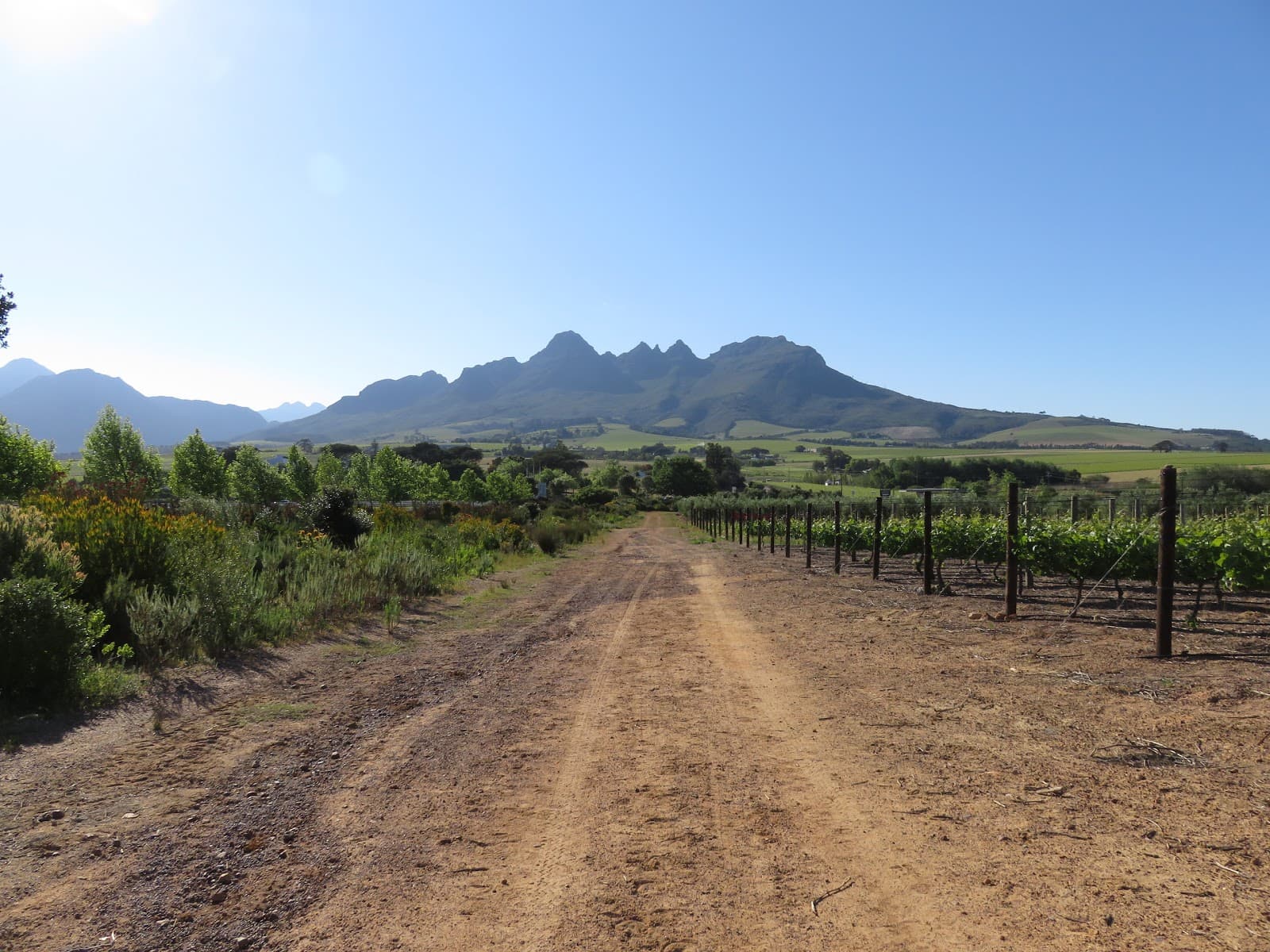
The Raithby ward, tucked between the Helderberg and Stellenbosch Mountain, provides deep red soils and a warmer mesoclimate that suits the estate's house style of generous, richly textured reds. Visitors are welcomed Monday to Friday from 09:00 to 16:30 and Saturday mornings until 13:00 for tastings in the intimate tasting room. It is the kind of place where you are likely to meet the winemaker himself — Nick Gebers remains the owner, farmer, and sole winemaker, three decades into a quiet career of making some of Stellenbosch's most individual wines.
Possibly the darkest-coloured wines in South Africa
Traditional winemaking: natural yeast, basket press, no fining or filtering
Every wine named after a famous stamp or philatelic term
Penny Black earned 4.5 stars in the John Platter Wine Guide
Owner-winemaker Nick Gebers has been making wine here since 1996
Sixteen wines from an impressive range of varieties
Historic property — the homestead was once Raithby's post office
Rustic
Boutique
Historic
The Winemaker
Nick Gebers
Nick Gebers has been owner and winemaker at Post House since 1996. After an early formation in Burgundy, he developed a fiercely traditional approach: natural yeast fermentation, basket pressing, no fining, no filtering. His Penny Black blend has earned 4.5 stars in the Platter Guide, and his wines are recognised as among the darkest and most concentrated in South Africa.
Our Heritage
The story of Post House Wines through the years
1981
Farm Purchased
Hermann Gebers buys the former post office farm on Raithby Road between Somerset West and Stellenbosch.
1988
Vineyards Planted
Nick Gebers begins planting vineyards, shifting the farm's focus from general agriculture to viticulture.
1996
First Experimental Vintage
Nick Gebers makes his first experimental barrels of wine on the property.
1998
First Commercial Release
After a stint in Burgundy, the first Post House wines are commercially released under the stamp-themed naming convention.
More in Stellenbosch
Quick Facts
RegionStellenbosch
Established1996
WinemakerNick Gebers
Rating4.7 / 5
Wine Varietals16