Loading...
Swartland
Community Heritage
Darling Cellars
Darling Cellars — Premium or Fine Wine country in Swartland
4.6(319 reviews)
Est. 1948Winemaker: Pieter-Niel RossouwAbout Darling Cellars
Established in 1948
Long before the Swartland became the most talked-about wine region in South Africa, the farmers of Darling were already tending vines on the windswept hills of the West Coast. The cooperative that would become Darling Cellars was established in 1948 as Mamreweg Co-operative, a collective of grain and dairy farmers who added grapes to their repertoire as the area's viticultural potential became apparent. For nearly five decades, the cooperative operated quietly, producing bulk wine for the broader industry.
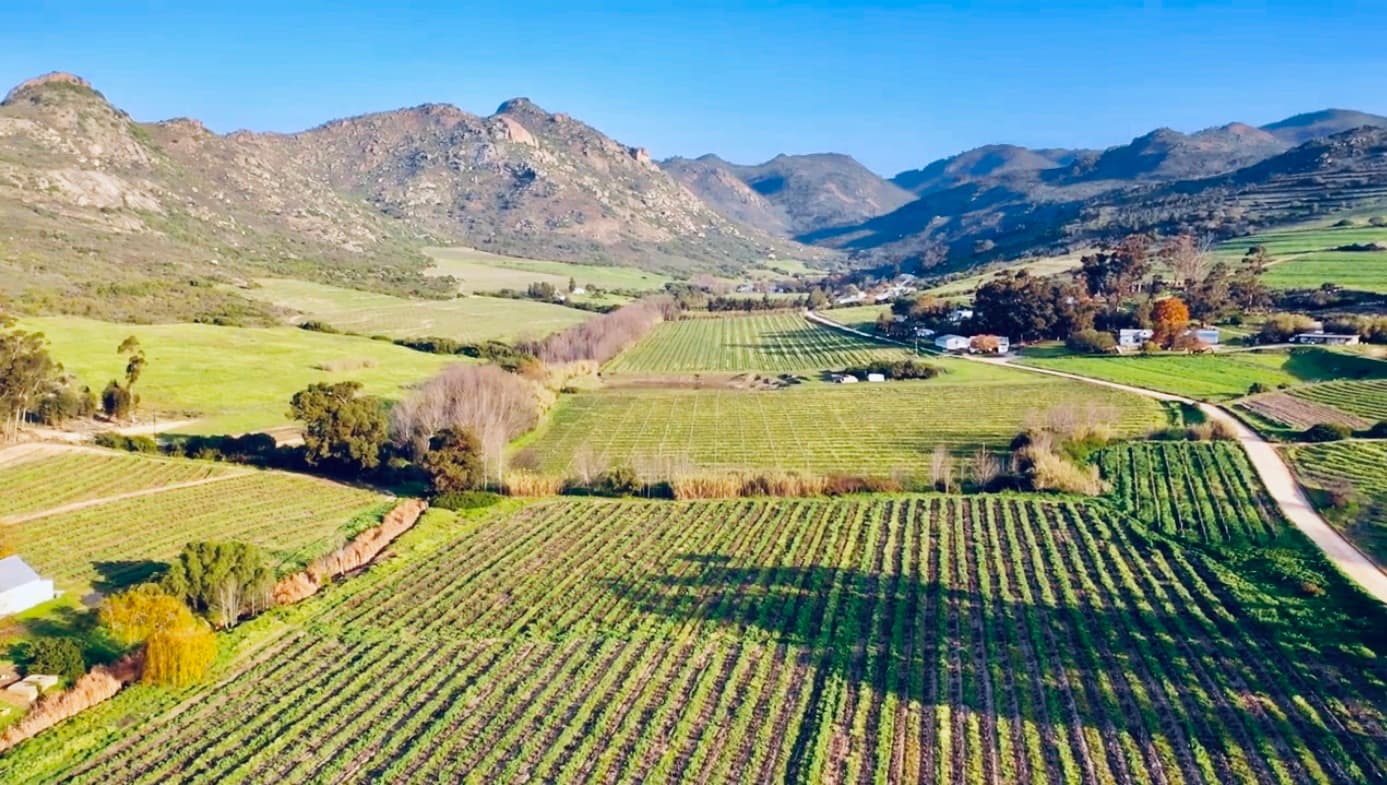
In 1996, Mamreweg converted from a cooperative into a private company and rebranded as Darling Cellars, signalling a decisive shift from commodity production to quality winemaking. The transformation was built on a remarkable natural asset: nearly 1,300 hectares of vineyard land, much of it planted to unirrigated bush vines in the Groenekloof ward — a cool-climate pocket just fifteen kilometres from the Atlantic Ocean. The maritime influence, morning fogs, and afternoon sea breezes create conditions that few inland regions can match, particularly for Sauvignon Blanc and old-vine Chenin Blanc.
Today, seventeen grower-shareholders supply approximately 6,000 tons of grapes annually to the cellar. Nearly 95 percent of the vineyard land receives no irrigation whatsoever, with gnarled bush vines yielding a meagre two to three tons per hectare — the kind of naturally low yields that concentrate flavour and character without any cellar manipulation. Historically a dairy area, Darling has emerged as one of the Cape's most exciting terroir-driven wine origins in little more than two decades.
Head winemaker Pieter-Niel Rossouw, who joined in 2014, has sharpened the cellar's focus, particularly on reds. The Reserve range, anchored by the Arum Fields Chenin Blanc — named for the wild arum lilies that bloom across the fields each August — has earned consistent acclaim, including 91 points from international critics. The portfolio spans everyday wines through to premium single-vineyard bottlings, with bush vine Sauvignon Blanc, Shiraz, Pinotage, and old-vine Chenin Blanc among the highlights.
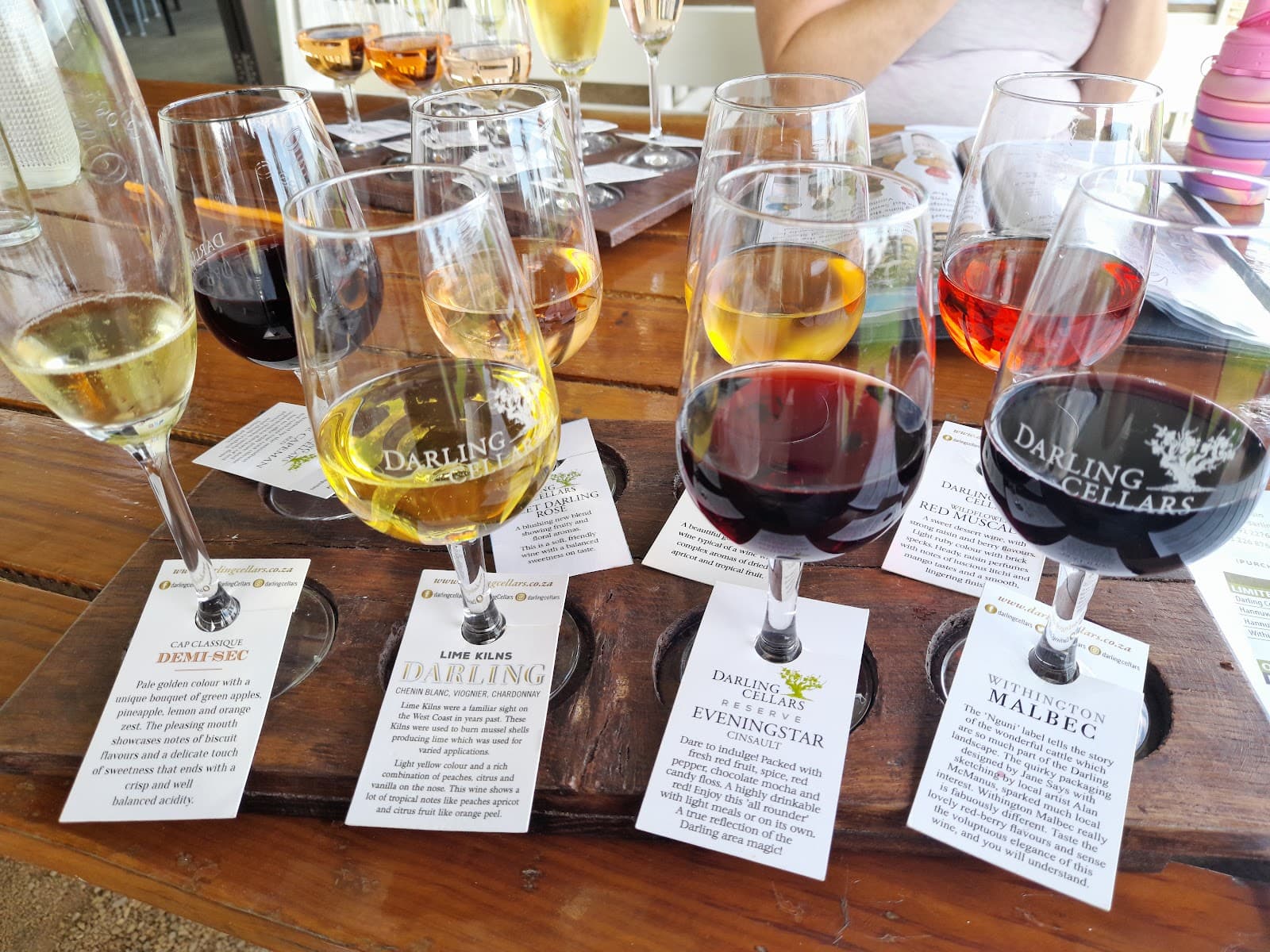
Beyond the cellar, Darling Cellars is one of the most visitor-friendly estates on the West Coast. The tasting room offers panoramic mountain views from an outdoor terrace. A bistro serves contemporary cuisine including pizza, platters, and food-and-wine pairings. A jungle gym and kids' tasting ensure families are genuinely welcome. The property is wheelchair accessible and dog-friendly. Guided cellar tours reveal the modern facility with its stainless steel tanks, efficient berry-sorting systems, and dedicated barrel rooms. It is a place where the quiet revolution of Darling's terroir becomes tangible in every glass.
Nearly 95% of vineyards are unirrigated bush vines yielding just 2-3 tons per hectare
Cool-climate Groenekloof ward — just 15km from the Atlantic Ocean
Cooperative heritage dating to 1948, now a private company since 1996
Arum Fields Chenin Blanc Reserve rated 91 points internationally
Family-friendly: kids' tasting, jungle gym, dog-friendly, wheelchair accessible
BWI, IPW, and WIETA sustainability accreditations
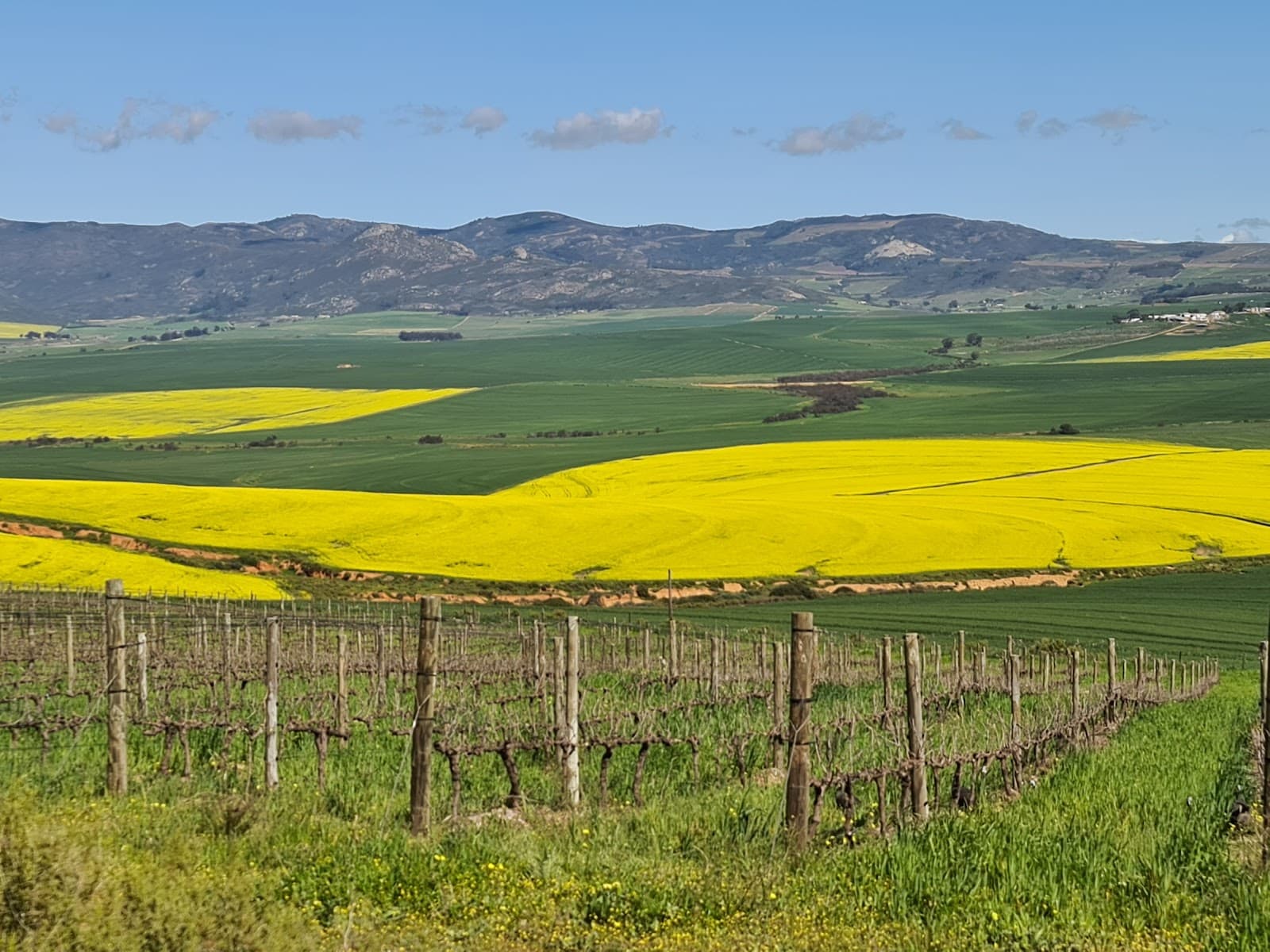
Panoramic mountain views from the outdoor tasting terrace
Award-Winning Wines
Traditional
Family Friendly
Scenic
Rustic
Historic
The Winemaker
Pieter-Niel Rossouw
Pieter-Niel Rossouw has been head winemaker at Darling Cellars since 2014, specialising in red wines. He works with fruit from seventeen grower-shareholders across nearly 1,300 hectares of predominantly unirrigated bush vines in the Groenekloof ward, crafting wines that express the cool-climate West Coast terroir.
Our Heritage
The story of Darling Cellars through the years
1948
Mamreweg Co-operative Founded
Local farmers establish the Mamreweg Co-operative, laying the groundwork for what will become Darling Cellars.
1996
Conversion to Private Company
The cooperative converts to a private company and rebrands as Darling Cellars, shifting focus to quality winemaking.
2014
Pieter-Niel Rossouw Joins
Pieter-Niel Rossouw becomes head winemaker, sharpening the cellar's focus on premium wines.
Sustainability
Darling Cellars holds BWI (Biodiversity & Wine Initiative), IPW (Integrated Production of Wine), and WIETA (agricultural ethical trade) accreditations, demonstrating a commitment to environmental and social sustainability.
Accreditations
BWI (Biodiversity & Wine Initiative)
IPW (Integrated Production of Wine)
WIETA (Agricultural Ethical Trade)
Who Is This For?
Perfect for Sunny Days
A Wet Day
Cosy Winter Visits
Corporate Events
Cyclists
Private Events
Families with Young Kids
Families with Teens
Large Groups
Weddings
Non-Drinker Friendly
More in Swartland
Quick Facts
RegionSwartland
Established1948
WinemakerPieter-Niel Rossouw
Rating4.6 / 5
Wine Varietals7
Kid-Friendly
Pet-Friendly
Wheelchair Accessible
Views & Setting
Cellar
Farmland Scenery
Gardens / Lawns
Mountains
Panoramic Views